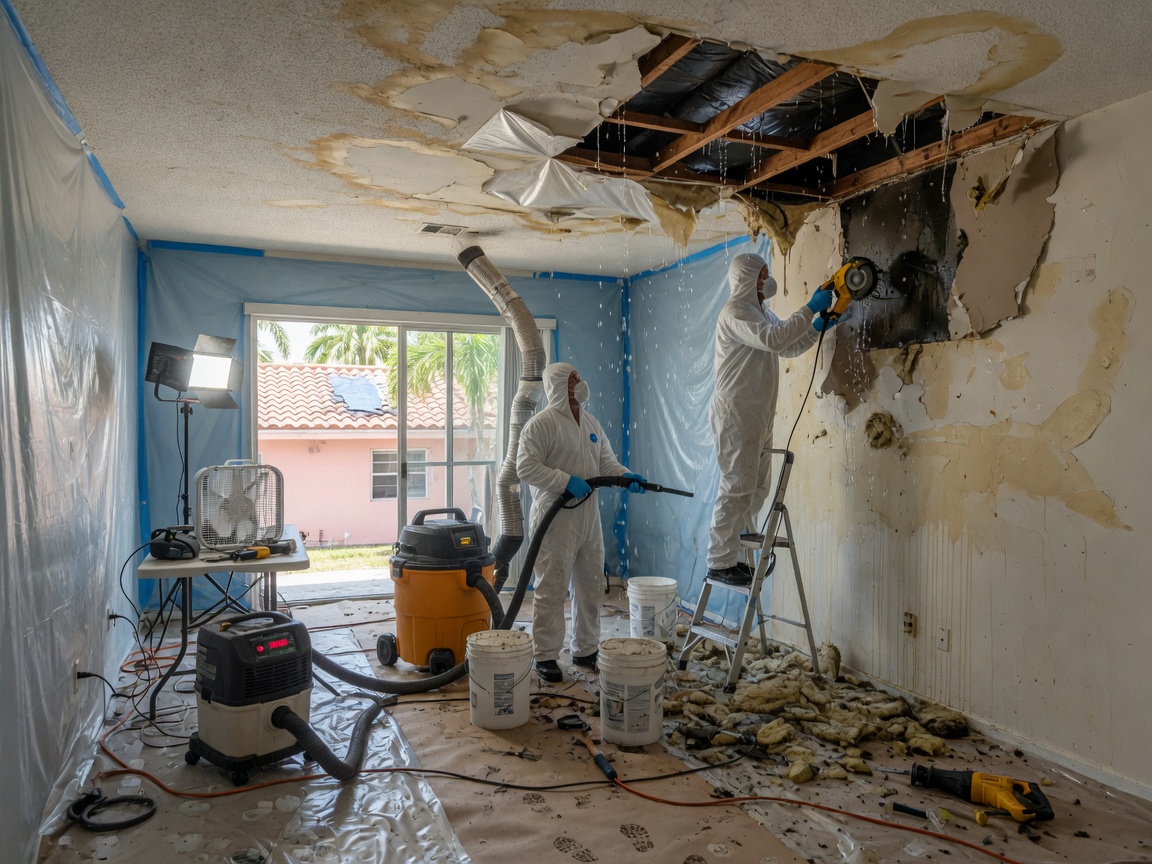
Miami roofs take wind and short, heavy rain. Water that gets under barrel tile, through a failed boot, or past a wall flashing shows up on a ceiling hours or days later, after it has run along a truss and found a fastener hole. The stain is the exit. The wet insulation is the path.
We open the wet ceiling, pull soaked insulation, and dry the deck and the gypsum from below. A roofer stops the entry. We stop the indoor damage. Wind-driven rain after a named storm is the same indoor job with a different claim path, because flood and wind are not the same coverage.
On a slab house the drip does not end at the ceiling. Water that ran down an interior wall wets the base plate and the pad. We dry wet roof sheathing and ceilings and we meter the wall all the way to the floor. Leaving a wet base plate in Miami humidity is how a roof leak becomes a mold claim two weeks later.
Whether the carrier pays depends on how the water entered. Whether a Florida homeowners policy covers the water is the overview. Rain through a storm-damaged roof is often an HO-3 conversation. Water that came in at grade is usually a flood conversation. We photograph the ceiling, the insulation, and any exterior opening we can see from the ground. We do not climb a wet tile roof to diagnose flashing.
Technician insight
Water follows the underside of the deck until it hits a screw or a seam, then it drops. Opening only the stained board misses the wet bay next to it. Meter left and right of the stain before you cut.
Roof Leak Water Damage Services We Offer
✓Barrel-Tile Leak Interiors
Indoor drying after water under concrete or clay tile found a path to the ceiling.
✓Boot and Penetration Stains
Pipe boots, vents, and skylights that drip into a closet or hall.
✓Soffit and Fascia Intrusion
Wind-driven rain at the eave that wets the exterior wall and the interior corner.
Pricing
Priced by affected area, water category, and drying days. You get the number in writing before equipment is set.