About us
About Miami Restoration and Carpet Care
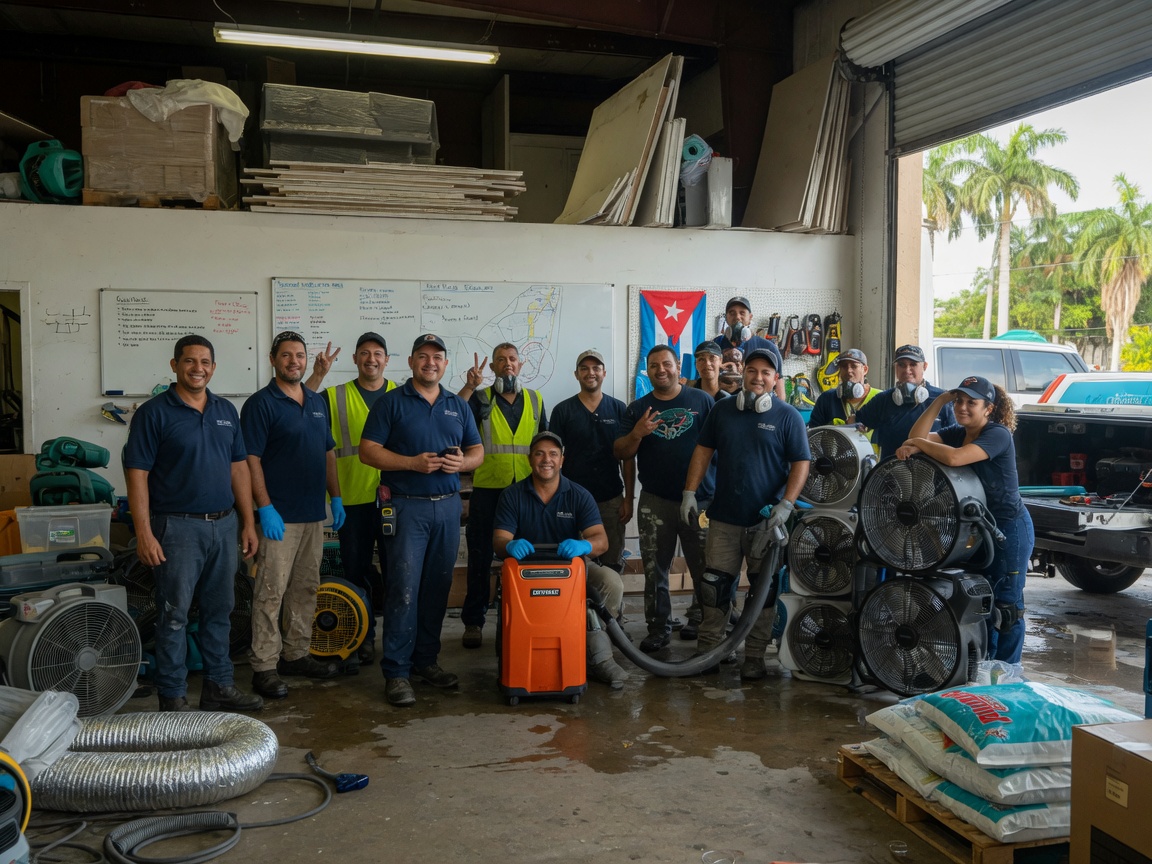
About Miami Restoration and Carpet Care
Most Miami houses sit on a slab. There is no basement for water to fall into, so a leak travels sideways under tile, behind baseboards, and into the first course of CBS block. That is a different drying job from a northern basement flood, and it is the job we built this company around.
A lot of the housing stock from the 1920s through the early 1970s still has original cast iron drain lines. Those pipes last about 50 to 75 years. They fail from the bottom of the pipe first, which is why the first sign is often a backup, a cracked floor tile, or water coming up through the slab rather than a visible burst on a wall.
Miami-Dade is also condo-dense. Under Florida Statute 718, a supply line inside a unit and a drain in a common wall are not the same claim. An upper-floor failure routinely soaks three or four units below it. We document source, path, and moisture by unit so the association, the HO-6 carriers, and the unit owners are not arguing over the same wet drywall.
We work water losses across Miami-Dade, from Homestead up to Aventura. Carpet and rug cleaning stays on the site because wet carpet is part of most indoor water jobs, and because a lot of Miami floors are still carpet over pad on slab. We do not invent a founding story. The work is the extraction, the drying, and the file.
- Slab-on-grade and CBS construction, not basement drying
- Cast iron drain failures treated as a source, not a mystery stain
- Condo losses documented for the 718 common-element versus unit split
- Florida mold law observed: we remediate, an independent licensee assesses
Credentials & guarantees
- ✓Moisture mapping with pin and pinless meters on gypsum and framing
- ✓Category 3 sewage handled as contaminated water
- ✓Florida Chapter 468 Part XVI observed: we do not assess and remediate the same mold project
Our guarantee
Written scope before equipment is set. Equipment comes out when gypsum and framing hit dry standard, not on a calendar day.