Miami-Dade County
Water Damage Restoration in Miami, FL
A cast iron drain that failed under the slab, an upstairs supply line that soaked three units, a clogged condensate line in an interior closet. We extract the water, dry the CBS walls and slab, and hand you moisture readings your insurer can actually use.
- Answered 24 hours
- Written moisture map
- Miami-Dade only
- Separate mold assessor, as Florida law requires
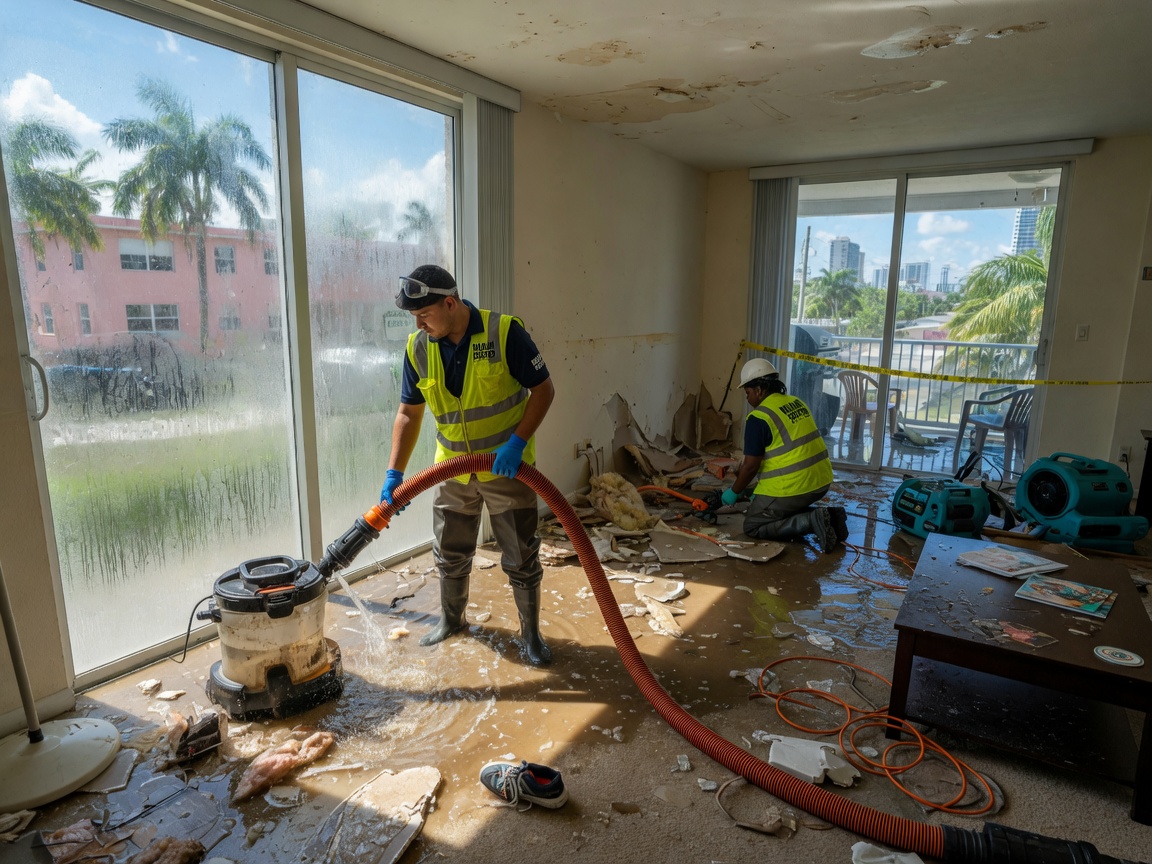
What we handle
Water Damage Services in Miami, FL
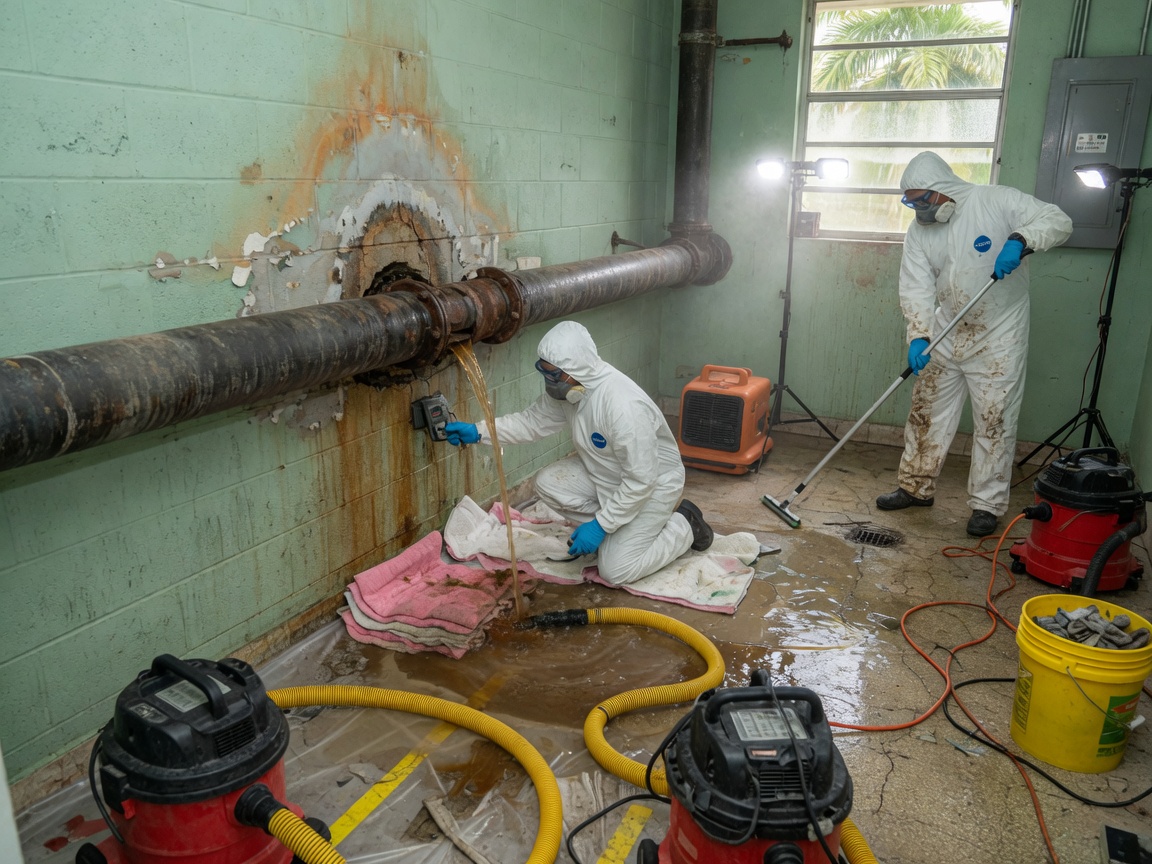
Cast Iron Pipe Leak Cleanup
Water and sewage from a failed cast iron drain under a Miami slab, extracted and dried as a Category 3 loss.
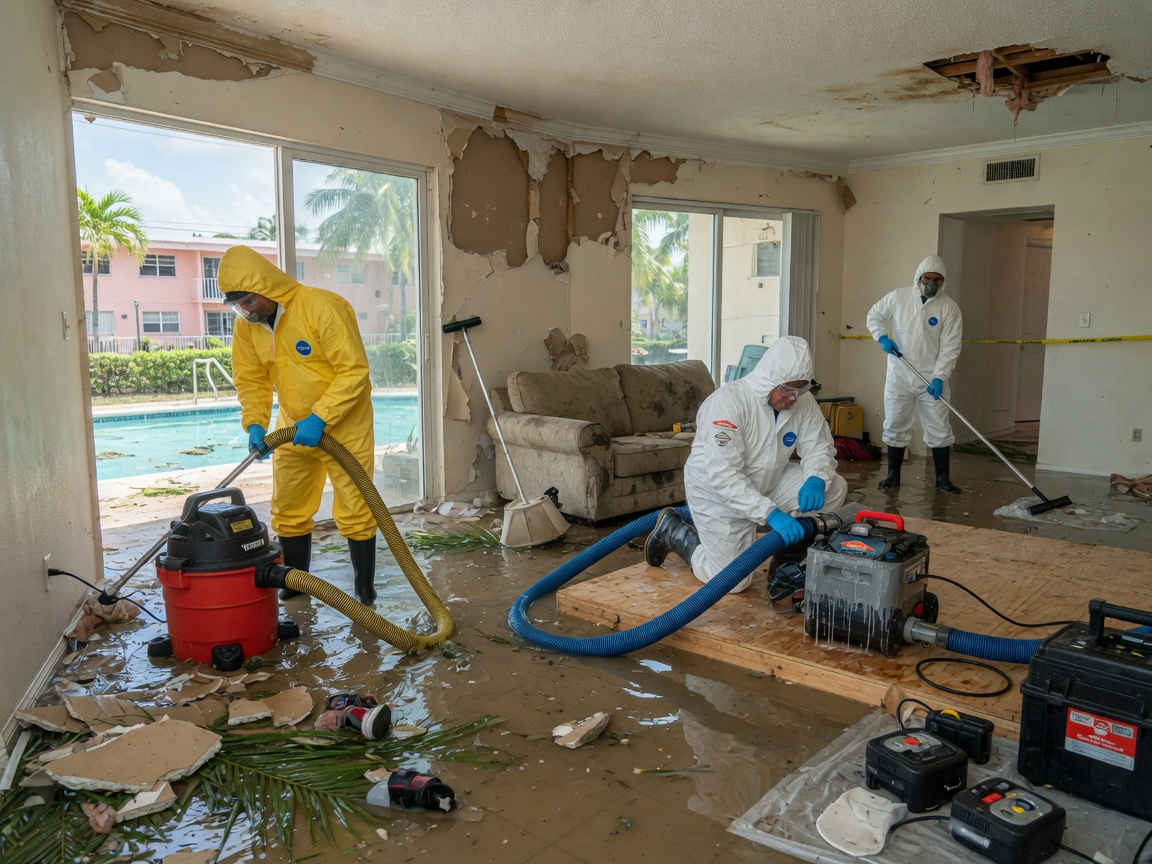
Emergency Water Removal
Same-day extraction of standing water from Miami slab homes and condo units, including pad and under-tile water.
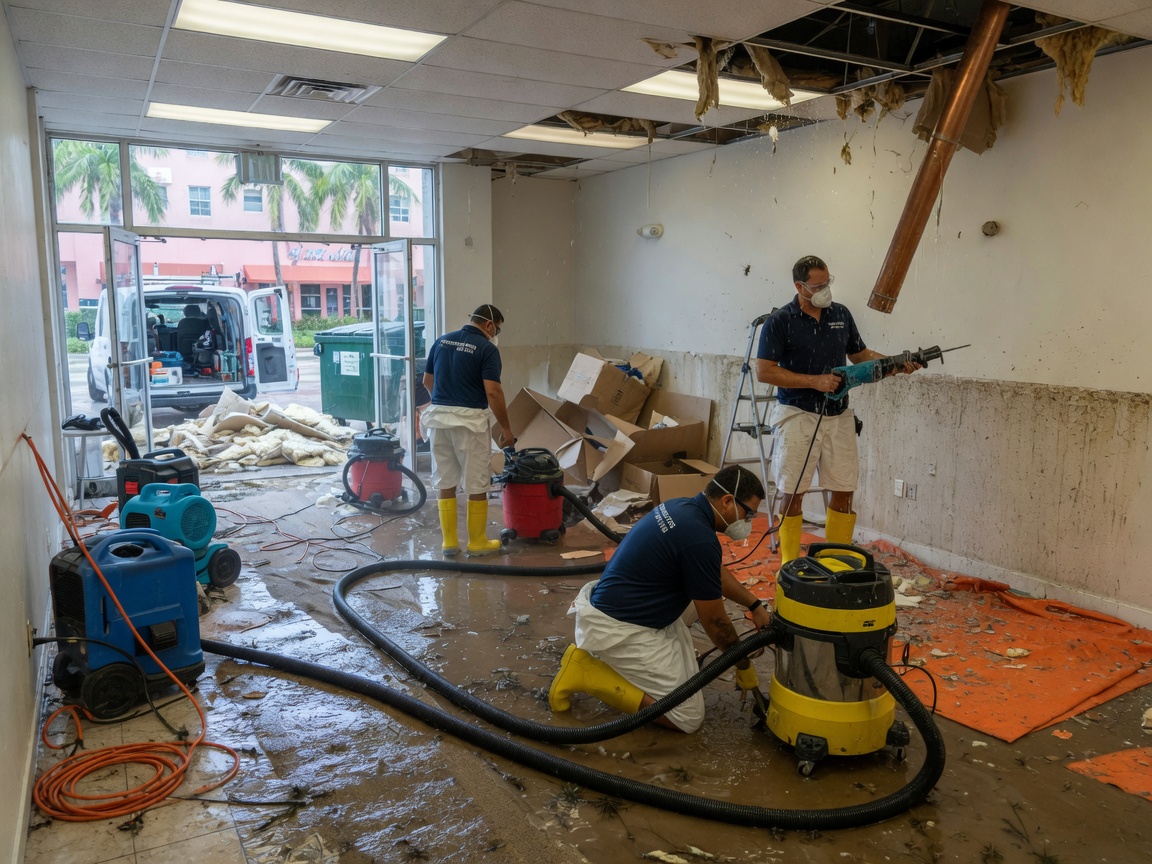
Burst Supply Line Cleanup
Cleanup after a copper, PEX, or braided supply line fails inside a Miami house or condo stack.
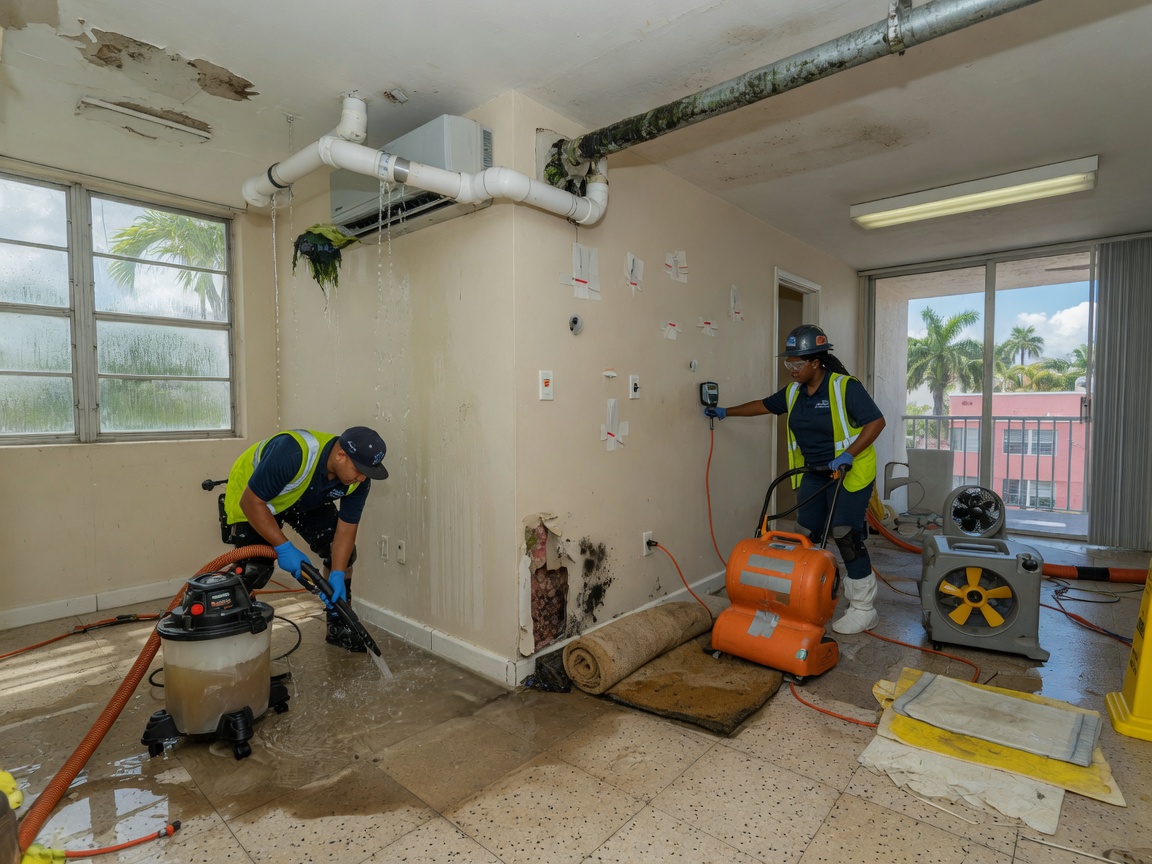
AC Condensate Leak Cleanup
Cleanup of clogged air-handler condensate lines that overflow into Miami interior closets and wall cavities.
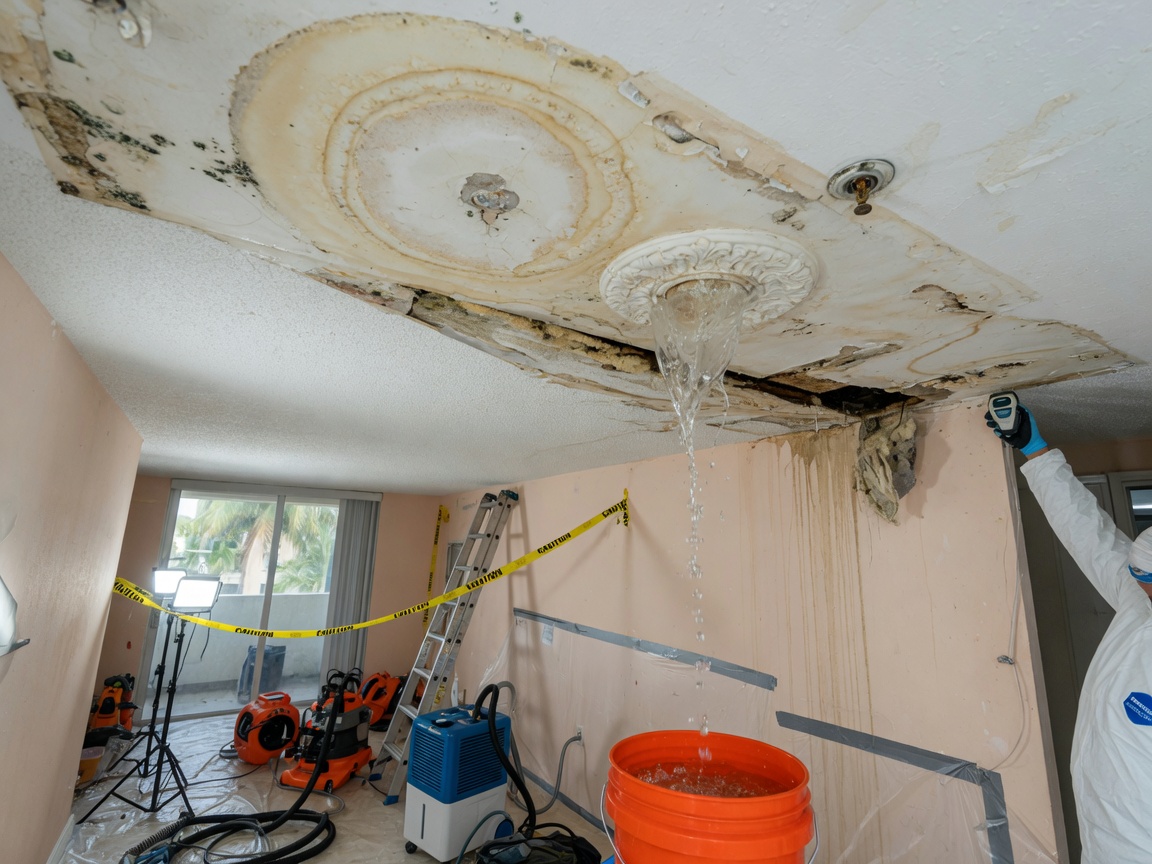
Ceiling Leak From Upstairs Unit
Response when an upper-unit supply line, drain, or fixture soaks the ceiling and rooms below it.
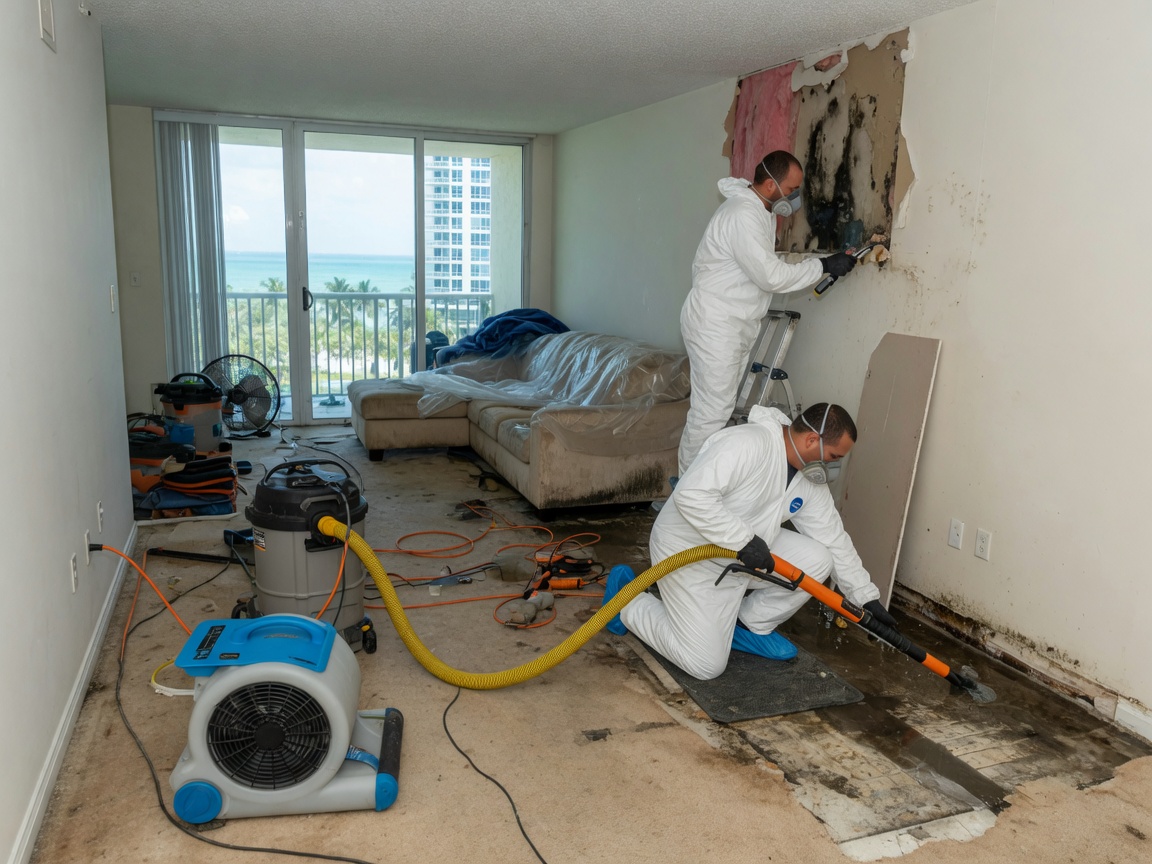
Condo Water Damage Cleanup
Multi-unit water losses in Miami-Dade condominiums, documented for the 718 common-element versus unit split.
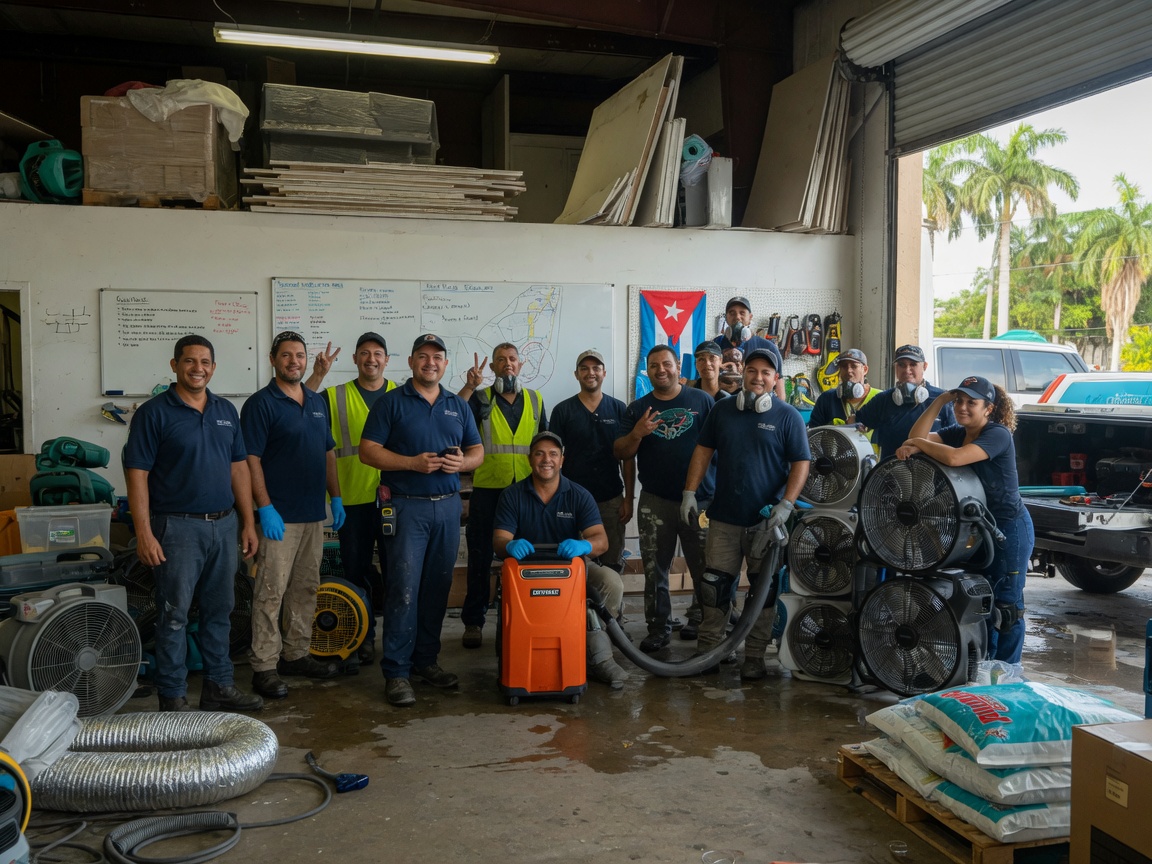
About Miami Restoration and Carpet Care
Most Miami houses sit on a slab. There is no basement for water to fall into, so a leak travels sideways under tile, behind baseboards, and into the first course of CBS block. That is a different drying job from a northern basement flood, and it is the job we built this company around.
A lot of the housing stock from the 1920s through the early 1970s still has original cast iron drain lines. Those pipes last about 50 to 75 years. They fail from the bottom of the pipe first, which is why the first sign is often a backup, a cracked floor tile, or water coming up through the slab rather than a visible burst on a wall.
- Slab-on-grade and CBS construction, not basement drying
- Cast iron drain failures treated as a source, not a mystery stain
- Condo losses documented for the 718 common-element versus unit split
- Florida mold law observed: we remediate, an independent licensee assesses
14
Specialist services
12+
Areas covered
Free
Estimates & advice
How it works
From the first call to dry standard
Stop the source
On the first call we walk you to the shutoff. In most Miami houses that is the meter at the front, a valve by the water heater, or the unit's own shutoff in a condo. Stopping the water before we arrive saves a full room of drying.
Extract and class the water
Standing water comes out first. We class it as clean, gray, or black so the rest of the job (pad pull, containment, disposal) matches the source. A toilet overflow and a cast iron sewage backup are not the same protocol.
Map moisture and set equipment
Pin and pinless readings go on gypsum, base plates, and any wood we can reach. Thermal imaging marks the wet pattern under tile. Dehumidifiers and air movers are placed from that map, not from how many machines happen to be on the truck.
Read daily until the numbers are dry
We return, log readings, and move equipment as rooms come down. In Miami humidity this often takes longer than a dry-climate job. Equipment leaves when materials hit dry standard, not when the room looks dry to the eye.
Close the file
You get photos, the moisture map, daily logs, and the equipment list. Carpet that can be saved is cleaned after the pad and slab are dry. If mold work is in scope, the independent assessor's report sits in the same packet.
Why Choose Us
Miami water losses fail in a few repeatable ways. These are the ones we plan the job around.
Drying a slab, not a basement
Water in a Miami house parks under the tile and in the bottom of the wall cavity. We meter the grout line, the baseboard, and the first course of block, then float or pull floor covering so air actually reaches the wet material. Aiming a fan at a closed room does not dry a slab.
Condo files that split by unit
A fourth-floor supply line can wet units on three, two, and one. We map each unit separately, note whether the failed component is inside the unit or in a common chase, and keep photos tied to room and floor. That file is what 718 disputes actually run on.
Dehumidifiers sized by load
Miami air is already wet. Air movers without enough dehumidification just stir humid air through the house. We size pints-per-day to the class of water, the cubic footage, and the outdoor grain count, then leave the equipment until gypsum and framing read dry, not until a calendar day arrives.
Mold assessment stays independent
Florida Statutes Chapter 468, Part XVI, stops the same company from assessing and remediating mold on the same structure within 12 months. We do the water work and the remediation. A separate DBPR-licensed mold assessor does the inspection and the clearance. That is the law, and it is also better for the claim.
Service area
Water Damage Restoration Near Me, Serving Miami, FL
From the blog
Miami water damage guides
2026-08-30T17:29:15.449Z
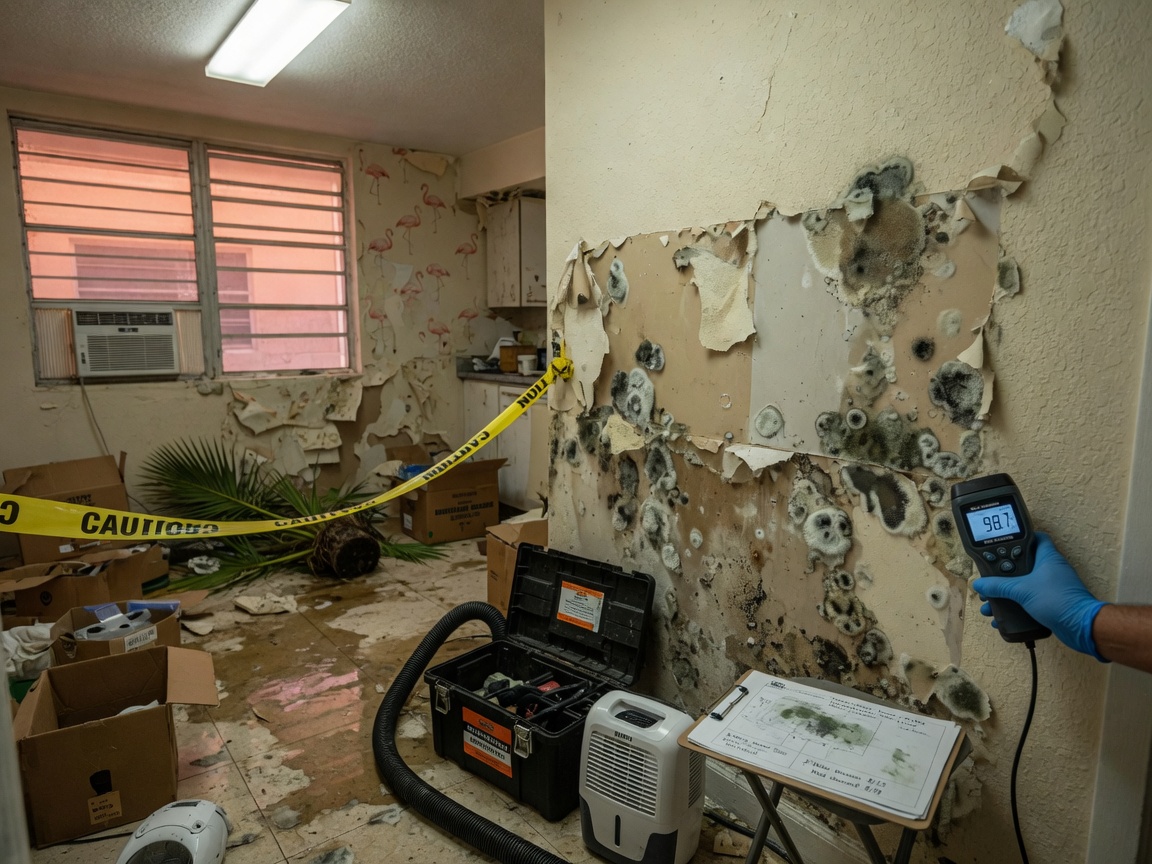
How long does it take for mold to grow after water damage in Miami?
In Miami humidity, mold can start on wet building materials in 24 to 48 hours. Drying has to include dehumidification, not only fans.
2026-08-26T17:29:15.449Z
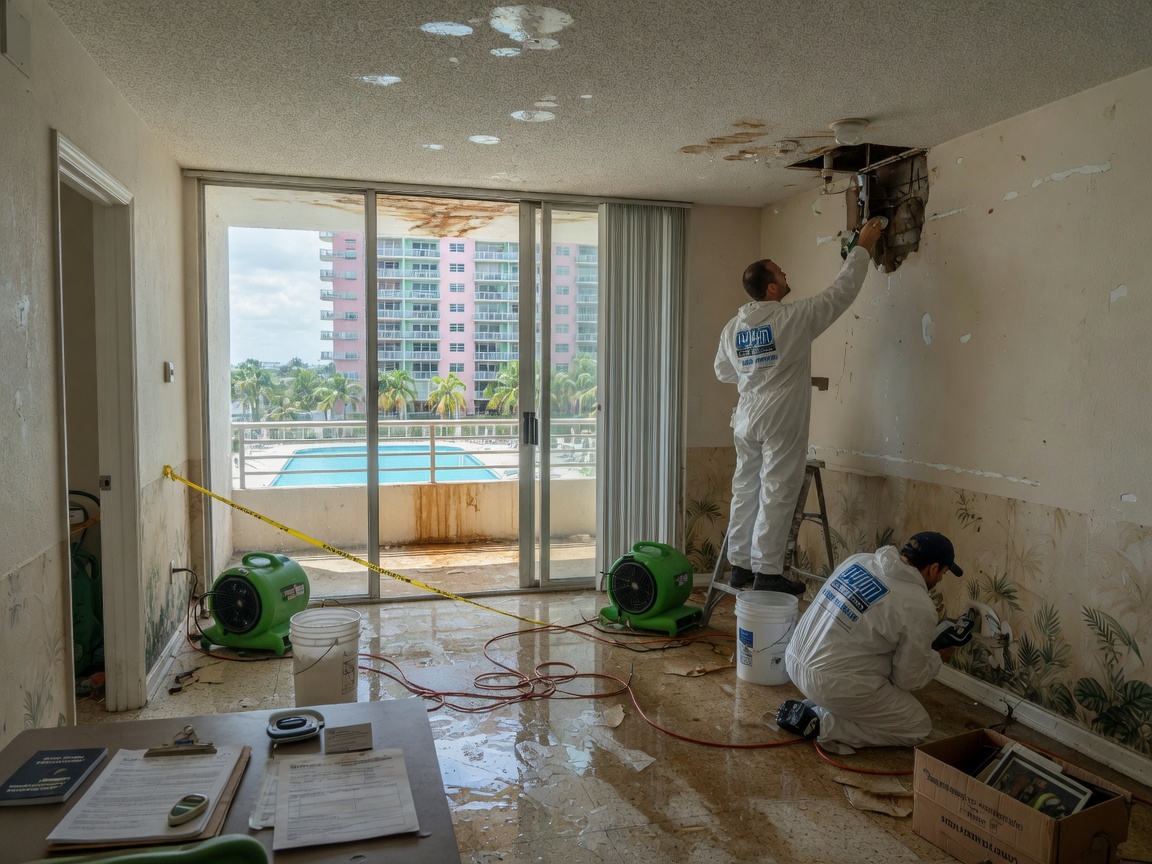
Who pays when an upstairs condo unit floods your apartment in Florida?
Florida Statute 718 splits common-element plumbing from unit plumbing. The declaration, the master policy, and your HO-6 all matter.
2026-08-22T17:29:15.449Z
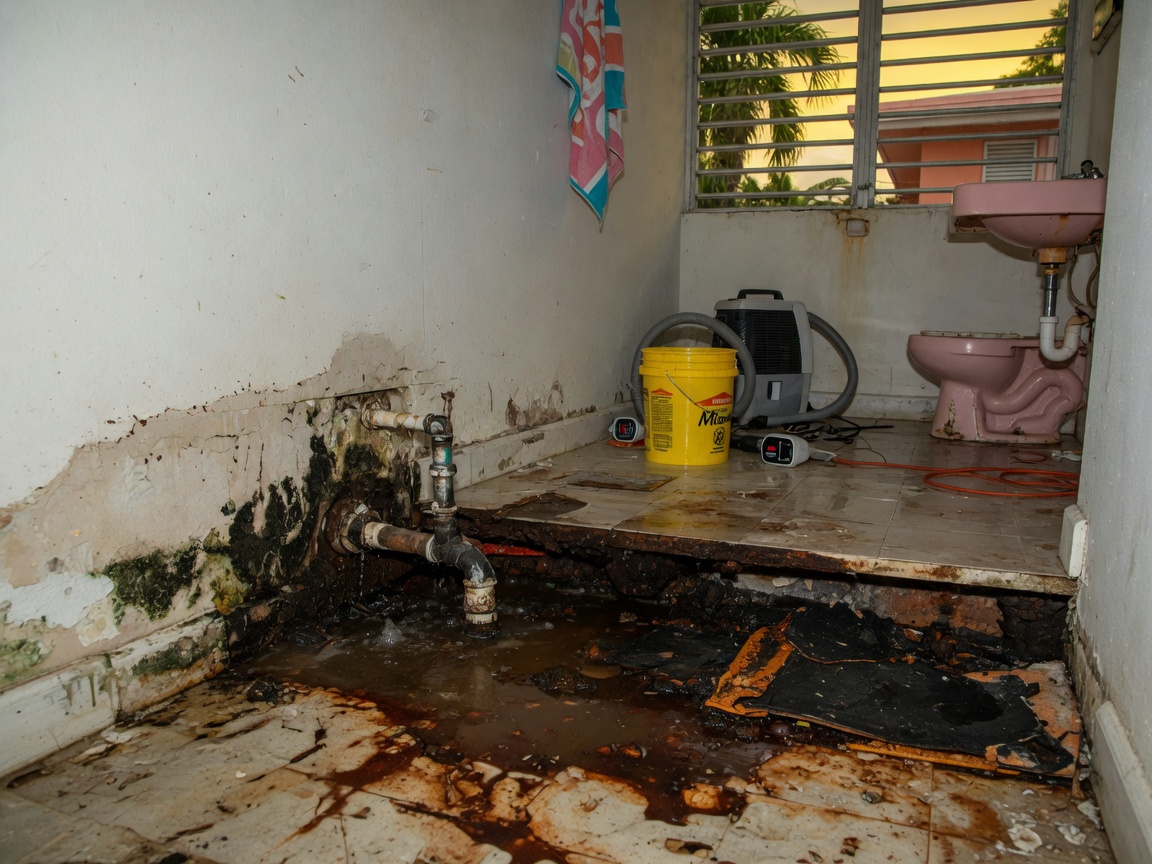
Signs your Miami home has a failing cast iron drain line
Cast iron from the 1920s to early 1970s fails at the bottom of the pipe. Backups, cracked tile, and water through the floor are the usual si…
Good to know
Water Damage Restoration FAQs in Miami, FL
Still have questions? Call and we will talk through the loss.
(305) 390-4900